
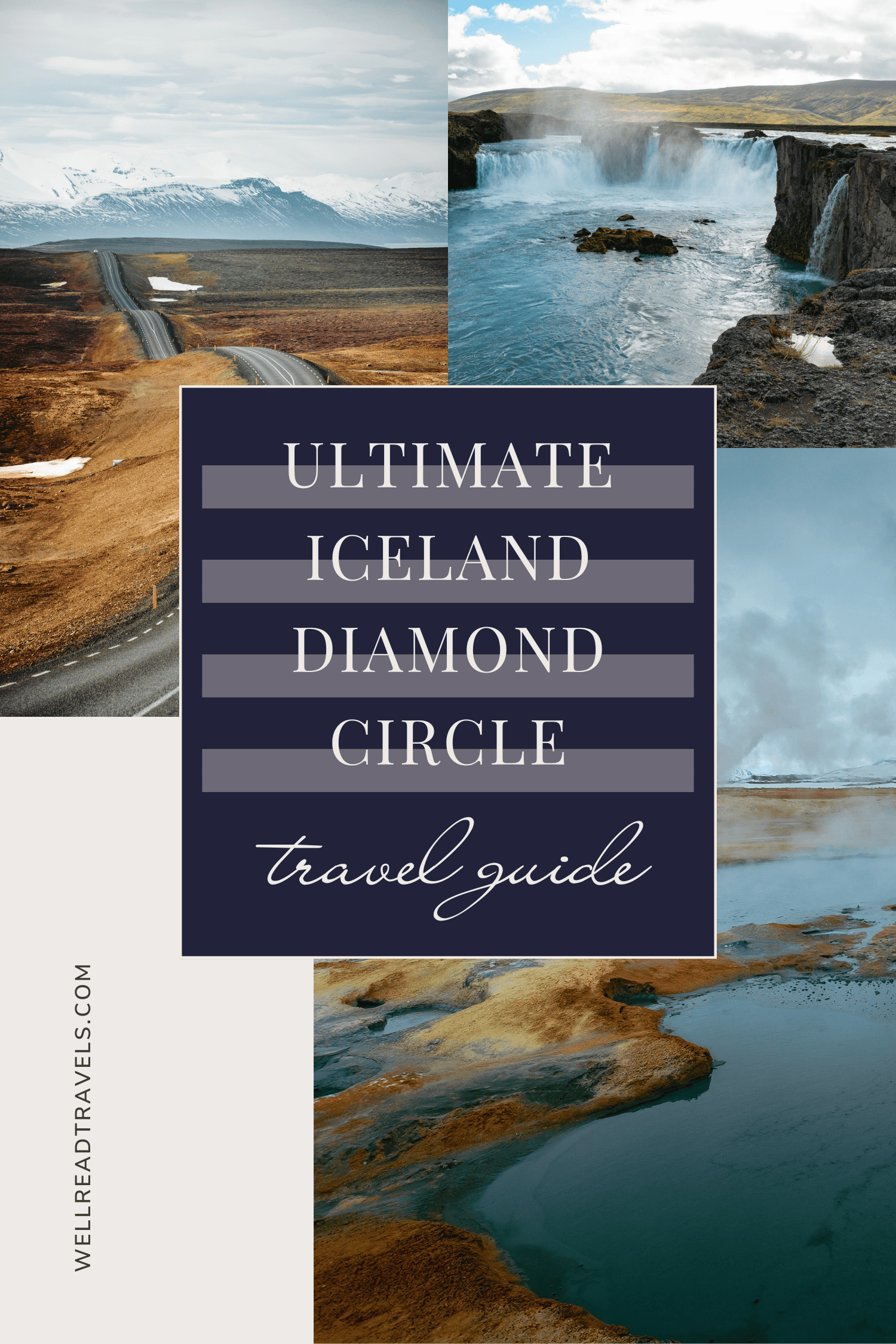
If you’ve heard of the famous Golden Circle, think of Iceland’s Diamond Circle as its quieter, wilder counterpart. Tucked away in North Iceland, this scenic driving route loops through some of the country’s most dramatic landscapes, thundering waterfalls, steaming geothermal areas, volcanic terrain, and even whale-filled coastal waters. The best part? This region is lesser known, and you can enjoy it without the heavy crowds of the south. It’s the kind of place where you can pull over simply because the view doesn’t feel real.
The Diamond Circle in Iceland is ideal for travelers seeking a more adventurous, off-the-beaten-path experience. Whether you’re a repeat visitor or just want to see a different side of Iceland, this route offers a slower, more immersive way to explore. One that feels a little more raw, a little more personal, and entirely unforgettable.
This post contains affiliate links, and I may earn a small commission when you click on the links at no cost to you.
What is Iceland’s Diamond Circle?
The Diamond Circle in North Iceland is a picturesque drive covering roughly 155 miles (250 km) and connecting some of the region’s most incredible natural attractions.
The loop typically starts and ends in Akureyri, the largest town in North Iceland, or near the Lake Mývatn region, depending on your itinerary. From there, the route takes you through coastal villages, powerful waterfalls, dramatic canyons, and geothermal areas, making it one of the most diverse and rewarding road trips in the country.
Know Before You Go
Before setting out on Iceland’s Diamond Circle, there are a few things you’ll want to know to make the most of your trip.
- You will need about 2-3 days dedicated to seeing the Diamond Circle. In 2 days, you’ll be able to see the highlights at a faster pace. 3 days will provide you with a more relaxed pace and time for hidden gems, soaking, and hiking. 1 day is possible, but rushed, so I wouldn’t recommend it.
- Short on time? You can easily reach Akureyri by taking a connecting flight from Keflavík International Airport when flying into Iceland. Alternatively, the drive from the airport to Akureyri takes about five and a half hours.
- The best way to explore the Diamond Circle is by rental car. Public transportation is limited, and many of the most beautiful viewpoints and hidden gems are difficult to access without your own vehicle.
- While cell phone coverage is generally good in towns, some stretches of the route have weaker service. Download offline maps before your trip and save any hotel confirmations or directions you’ll need access to.
- The roads on the Diamond Circle route are mostly paved, but you may come across an F-road or two if you venture off on your own adventure (which I highly encourage).
- Before heading out each day, check road conditions and potential closures on road.is and the weather forecasts on vedur.is. Strong winds can sometimes be a bigger concern than snow or rain, particularly on exposed roads.
- Fuel up when you can, as gas stations are sparse in the north.
- Wondering what to pack? You can’t go wrong with layers (even in summer), a waterproof jacket, wool socks, sturdy hiking boots, and a swimsuit (don’t skip this, trust me).
- If whale watching is on your itinerary, reserve your tour in advance during the summer months. Húsavík is considered the whale-watching capital of Iceland, and popular departure times can sell out.
- Restaurants and cafes are available in towns like Akureyri, Húsavík, and Mývatn, but services can be sparse between major attractions. Keeping snacks and water in the car is especially helpful if you’re planning longer hikes or sightseeing days.
- One of the best parts of driving the Diamond Circle is the scenery along the way. Waterfalls, lava fields, mountain views, and roadside viewpoints appear constantly. Build flexibility into your itinerary so you can stop whenever something catches your eye.
Wondering what to pack for Iceland? Check out my complete Iceland packing list with everything you need for every season, from waterproof layers to must-have road trip essentials.

When To Go
Iceland’s Diamond Circle can be visited year-round, but your experience will vary significantly depending on the season. From endless summer daylight to winter Northern Lights, each time of year offers something unique.
Summer (June–August)
Summer is the most popular time to visit the Diamond Circle in Iceland, and for good reason. Temperatures are mild, daylight stretches nearly around the clock thanks to the midnight sun, and all roads and attractions are typically accessible.
This is the best time for travelers who want maximum flexibility, hiking opportunities, and the easiest driving conditions. The tradeoff is that you’ll encounter more visitors, particularly at popular stops like Dettifoss and Húsavík.
Shoulder Season (May & September)
For many travelers, the shoulder season offers the perfect balance. Crowds are smaller, accommodations can be more affordable, and the softer light creates beautiful conditions for photography.
Roads are generally still accessible, though the weather can be less predictable than in summer. You’ll want to pack extra layers and keep an eye on forecasts, but you’ll be rewarded with a quieter, more peaceful experience.
Winter (October–April)
Winter transforms the Diamond Circle into a snowy wonderland. Waterfalls freeze into dramatic ice formations, landscapes are dusted with snow, and you may have the opportunity to see the Northern Lights dancing overhead.
However, winter travel requires additional planning. Snow, ice, strong winds, and limited daylight can make driving challenging, and some roads or attractions may temporarily close due to weather conditions. If you’re visiting during this time, be sure to monitor road conditions regularly and allow flexibility in your itinerary. Winter is best suited for confident winter drivers or travelers who are comfortable adapting plans based on the weather.
Hoping to see the Northern Lights in Iceland? Read my Northern Lights guide on how to maximize your chances of spotting the aurora, including the best times to visit and helpful forecasting tools.

Iceland’s Diamond Circle Route Overview
While you can drive the Diamond Circle in Iceland in either direction, I recommend traveling clockwise from Akureyri to Húsavík, then to Ásbyrgi and Dettifoss, and ending in Lake Mývatn. Not only is this route easy to navigate, but it also creates a natural progression through some of North Iceland’s most spectacular landscapes.
- Starting in Akureyri, you’ll ease into your adventure in North Iceland’s largest town along the Diamond Circle. Grab a coffee, stock up on snacks, and enjoy the colorful streets before heading toward the coast. From there, you’ll arrive in Húsavík, a charming fishing town known as Iceland’s whale-watching capital. Between the picturesque harbor, colorful buildings, and the opportunity to soak in the oceanfront GeoSea baths, it’s the perfect introduction to the Diamond Circle.
- As you continue east, the landscape begins to feel wilder and more remote. The peaceful forests and towering cliffs of Ásbyrgi Canyon offer a completely different side of Iceland, one that surprises many visitors. According to Norse mythology, the horseshoe-shaped canyon was formed by the hoofprint of Odin’s eight-legged horse, and standing beneath its towering walls, it’s easy to understand how these legends began.
- The route then ramps up dramatically as you reach Dettifoss, Europe’s most powerful waterfall. Long before you see it, you’ll hear the roar of glacial water crashing into the canyon below. It’s one of those places that makes you feel incredibly small in the best possible way. Just upstream, don’t miss neighboring Selfoss, a wide and elegant waterfall that often gets overshadowed by its more famous neighbor.
- The final stretch brings you to the geothermal wonders of the Lake Mývatn region, where bubbling mud pots, steaming vents, lava fields, and volcanic craters create an almost otherworldly landscape. After days spent exploring waterfalls, canyons, and rugged coastlines, Mývatn feels like the perfect grand finale. End your adventure with a soak in the Mývatn Nature Baths or spend the evening watching the sunset reflect across the lake.

Main Stops Along the Diamond Circle
Akureyri
Known as the “Capital of North Iceland,” Akureyri is the perfect place to begin your Diamond Circle adventure. Nestled at the base of Eyjafjörður, Iceland’s longest fjord, this charming town combines colorful streets, cozy cafes, and stunning mountain views. While many travelers simply pass through, it’s worth spending a few hours exploring the downtown area, grabbing a coffee, and soaking in the relaxed atmosphere before heading out on the road.
One of Akureyri’s most surprising attractions is the Akureyri Botanical Garden, one of the northernmost botanical gardens in the world. It’s a peaceful place to wander and showcases thousands of plant species that somehow thrive despite Iceland’s challenging climate.
If you’re spending the night, Akureyri also makes an excellent base thanks to its restaurants, grocery stores, accommodations, and easy access to the rest of the Diamond Circle.
Goðafoss Waterfall
Just a 30-minute drive east of Akureyri sits one of Iceland’s most beautiful waterfalls: Goðafoss, or the “Waterfall of the Gods.”
Unlike some of Iceland’s larger waterfalls, Goðafoss isn’t intimidating in size; it’s captivating in its symmetry. The wide, horseshoe-shaped cascade sends turquoise water plunging into the river below, creating one of the most photogenic scenes in North Iceland.
The waterfall is also steeped in history. According to legend, Iceland’s lawspeaker threw statues of the Norse gods into the falls after the country adopted Christianity around the year 1000, giving Goðafoss its iconic name.
One of the best things about Goðafoss is its accessibility. Short walking paths lead to viewpoints on both sides of the river, allowing visitors to experience different perspectives without a long hike.

Worth the Detour: Aldeyjarfoss
If you have extra time in your itinerary and want to venture beyond the main Diamond Circle route, consider making the trip to Aldeyjarfoss. Located on the edge of Iceland’s Highlands, this stunning waterfall is one of North Iceland’s best-kept secrets and offers a much more off-the-beaten-path experience than many of the region’s more popular attractions.
What makes Aldeyjarfoss so special is the dramatic contrast between the turquoise glacial water and the striking black basalt columns that frame the falls. The result is one of the most photogenic landscapes in Iceland, and often one you’ll have nearly to yourself.
Keep in mind that reaching Aldeyjarfoss requires driving on Iceland’s F-roads, which means you’ll need a 4×4 vehicle and should only attempt the drive when road conditions allow. While it does require additional time and planning, the detour is well worth it for travelers looking to experience a quieter, more rugged side of Iceland. If your itinerary has the flexibility, Aldeyjarfoss is the kind of hidden gem you’ll be talking about long after your trip ends.
Planning a longer trip to Iceland? Browse my detailed Iceland itineraries to see how the Diamond Circle fits into a larger road trip around the country.

Húsavík
Perched along Skjálfandi Bay, Húsavík is one of the highlights of Iceland’s Diamond Circle and a destination that feels distinctly different from anywhere else in Iceland.
This colorful fishing town has earned international recognition as one of the best places in Europe, and arguably the world, to go whale watching. During the summer months, humpback whales are frequent visitors to the bay, and lucky travelers may also spot minke whales, white-beaked dolphins, and even blue whales.
Even if whale watching isn’t on your itinerary, Húsavík is worth a stop. Stroll along the harbor, admire the colorful homes, and enjoy the town’s laid-back atmosphere. It’s the kind of place where it’s easy to linger longer than planned.
If you’re interested in marine life, the Húsavík Whale Museum provides fascinating insight into the species that inhabit Icelandic waters and the region’s long history of whale watching.

Geosea Geothermal Baths
If Iceland is famous for geothermal bathing, then GeoSea might just be North Iceland’s best-kept secret.
Perched on a cliff overlooking Skjálfandi Bay, GeoSea offers a completely different experience from the Blue Lagoon. Instead of lava fields and crowds, you’ll find infinity-style pools overlooking the Arctic Ocean and surrounding mountains.
The mineral-rich seawater remains naturally warm year-round, creating an unforgettable setting to relax after a day of exploring. On clear days, you can watch whales swimming offshore while soaking in the pools. During the summer, the midnight sun paints the sky in shades of pink and gold, while winter visitors may even catch a glimpse of the Northern Lights.
The atmosphere here feels quieter and more intimate than many of Iceland’s famous geothermal spas, making it one of the most memorable stops along the Diamond Circle.
Thinking about visiting GeoSea Geothermal Baths? Check out my complete GeoSea guide with everything you need to know, including what to expect, ticket information, and whether it’s worth adding to your itinerary.
Tjörnes Peninsula
Just north of Húsavík lies the often-overlooked Tjörnes Peninsula, one of North Iceland’s hidden gems.
This rugged stretch of coastline offers dramatic sea cliffs, sweeping ocean views, and excellent birdwatching opportunities. During summer, puffins nest along portions of the coastline, while lucky visitors may spot whales from shore.
The peninsula also provides incredible views back toward Húsavík and the surrounding mountains, making it a worthwhile detour for travelers looking to escape the crowds and experience a quieter side of North Iceland.
Ásbyrgi Canyon
One of Iceland’s most unique landscapes, Ásbyrgi Canyon feels almost completely disconnected from the rest of the country.
The massive horseshoe-shaped canyon stretches nearly two miles long and is surrounded by towering cliffs that rise up to 330 feet (100 meters) above the forest floor. According to Norse mythology, the canyon was created when Sleipnir, Odin’s eight-legged horse, touched the earth with one of its hooves.
Whether you believe the legend or not, there’s no denying the canyon feels magical. Unlike much of Iceland’s barren volcanic terrain, Ásbyrgi is filled with lush birch forests, wildflowers, and peaceful walking trails. The contrast between the greenery and the dramatic canyon walls makes it one of the most unexpected stops on the Diamond Circle.
Diamond Circle Tip: Don’t stop at the first viewpoint. Follow the trails deeper into the canyon toward the pond at Botnstjörn for a quieter experience and some of the canyon’s most beautiful scenery.

Dettifoss
No stop along the Diamond Circle leaves a bigger impression than Dettifoss.
Fed by glacial meltwater from Vatnajökull, Europe’s largest glacier, Dettifoss is famous as the continent’s most powerful waterfall. The sheer volume of water crashing into the canyon below creates a roar that can be heard long before the waterfall comes into view.
Standing at the edge of the viewing area, you’ll feel the mist on your face and the ground vibrating beneath your feet. It’s not just something you see, it’s something you experience.
Pro Tip: If your itinerary allows, visit both sides of the waterfall.
- West Side: Easier access, improved roads, and shorter walks.
- East Side: More rugged, fewer visitors, and arguably the most dramatic viewpoints.
Each side offers a completely different perspective of the falls.

Selfoss Waterfall
Just upstream from Dettifoss sits one of North Iceland’s most underrated waterfalls: Selfoss.
Many visitors skip it in favor of its more famous neighbor, but that’s a mistake. Rather than a single dramatic plunge, Selfoss stretches across the width of the river in a series of elegant cascades. The result is a waterfall that feels wide, graceful, and surprisingly peaceful, in contrast to the thunderous power of Dettifoss.
The short walk between the two waterfalls is easy and well worth the effort. Together, they showcase two completely different sides of Iceland’s glacial rivers.
If You Have Extra Time: Hafragilsfoss
If you have extra time near Dettifoss, make a quick stop at Hafragilsfoss. Located just downstream, this often-overlooked waterfall plunges into the dramatic Jökulsárgljúfur canyon and offers stunning views with far fewer crowds than its famous neighbor.

Lake Mývatn Region
If Iceland’s Diamond Circle has a grand finale, it’s the Lake Mývatn region.
This area is one of the most geologically active and visually diverse landscapes in Iceland. Within a relatively small area, you’ll find steaming geothermal fields, volcanic craters, lava formations, pseudocraters, and scenic lakeside views. It feels less like one attraction and more like an entire outdoor playground for nature lovers.
Hverir Geothermal Area
One of the most otherworldly places in Iceland, Hverir looks more like Mars than Earth. Bubbling mud pots, steaming vents, and brightly colored mineral deposits create a surreal landscape unlike anything else along the route.
Dimmuborgir Lava Fields
Known as the “Dark Castles,” Dimmuborgir is a maze of lava formations, arches, and caves created by ancient volcanic eruptions. Walking through the trails here feels like stepping into a fantasy novel.
Skútustaðagígar Pseudocraters
These unusual crater-like formations were created when lava flowed over wetlands thousands of years ago. Today, walking paths provide excellent views across the lake and surrounding volcanic landscapes.
Mývatn Nature Baths
After several days of exploring waterfalls, canyons, and geothermal landscapes, there’s no better way to end your Diamond Circle road trip than with a soak in the Mývatn Nature Baths.
Often described as North Iceland’s answer to the Blue Lagoon, the baths feature mineral-rich, milky-blue water set against a backdrop of volcanic scenery. While smaller than some of Iceland’s more famous spas, many travelers prefer Mývatn for its relaxed atmosphere and significantly smaller crowds.
Slip into the warm water, take in the surrounding views, and reflect on the incredible landscapes you’ve experienced along the Diamond Circle. It’s the perfect ending to one of Iceland’s most unforgettable road trips.
Vogafjós Farm Resort
If you’re exploring the Lake Mývatn region, make time for a meal at Vogafjós Farm Resort. This family-run farm is known for its farm-to-table restaurant, where many ingredients come straight from the property. One of the highlights is the viewing window into the barn, where you can watch the cows while you eat. It’s a fun and unique stop that offers a glimpse into Icelandic farm life, and the homemade dairy products alone are worth the visit.
Not sure where to stay in Iceland? I’ve rounded up the best places to stay across the country, including recommendations for Akureyri, Lake Mývatn, and other North Iceland destinations.

2–3 Day Diamond Circle Iceland Itinerary
While it’s possible to drive the Diamond Circle in a single day, slowing down and spreading your visit over two or three days allows you to fully experience everything North Iceland has to offer. This itinerary balances iconic sights with enough flexibility to enjoy the journey along the way.
Day 1: Akureyri → Goðafoss → Húsavík
Morning
- Explore downtown Akureyri
- Grab breakfast and coffee before hitting the road
- Visit the Akureyri Botanical Garden (optional)
Midday
- Stop at Goðafoss Waterfall
- Walk to viewpoints on both sides of the falls
- Continue east toward Húsavík
Afternoon
- Explore Húsavík’s colorful harbor
- Enjoy lunch in town
- Visit the Whale Museum (optional)
Evening
- Whale watching tour
- Dinner overlooking the harbor
- Soak in GeoSea Geothermal Baths at sunset

Day 2: Húsavík → Tjörnes Peninsula → Ásbyrgi → Dettifoss → Mývatn
Morning
- Drive along the scenic Tjörnes Peninsula
- Stop at viewpoints overlooking the Arctic Ocean
- Continue to Ásbyrgi Canyon
Midday
- Hike through Ásbyrgi Canyon
- Visit Botnstjörn pond
- Picnic lunch or cafe stop
Afternoon
- Visit Dettifoss Waterfall
- Walk to the nearby Selfoss Waterfall
- Explore viewpoints along Jökulsárgljúfur Canyon
Evening
- Arrive in the Lake Mývatn region
- Enjoy dinner with lake views
- Optional sunset walk around the lake
Day 3: Explore the Mývatn Region
Morning
- Coffee and a relaxed start to the day
- Visit Skútustaðagígar pseudocraters
- Walk along the lakefront trails
Late Morning
- Explore Dimmuborgir Lava Fields
- Choose from several short hiking routes through the lava formations
Afternoon
- Visit Hverir Geothermal Area
- Drive up to Krafla and Víti Crater
- Enjoy lunch in the Mývatn area
Evening
- Soak in the Mývatn Nature Baths
- Dinner before continuing your Iceland road trip or returning to Akureyri
Short on Time? Here’s a 2-Day Version
Day 1
- Akureyri
- Goðafoss
- Húsavík
- Whale watching
- GeoSea
Day 2
- Tjörnes Peninsula
- Ásbyrgi Canyon
- Dettifoss
- Selfoss
- Hverir Geothermal Area
- Dimmuborgir
- Mývatn Nature Baths
This is a full day with a lot of driving, but it’s manageable during the summer months when daylight is nearly endless. For a more relaxed pace, I highly recommend adding the third day. The Mývatn region alone deserves several hours of exploration and is one of the most fascinating landscapes in all of Iceland.
Final Thoughts: Is the Diamond Circle Worth It?
Absolutely.
If you’re looking for an Iceland experience that feels a little more adventurous and a lot less crowded, the Diamond Circle is one of the most rewarding road trips in the country. While the Golden Circle is famous for introducing travelers to Iceland’s natural beauty, the Diamond Circle invites you to experience it on a deeper level.
What I loved most about the Diamond Circle wasn’t just the individual attractions; it was the feeling of the journey itself. The quiet roads, the unexpected viewpoints, and the moments when we’d pull over simply to admire the scenery all made this part of Iceland feel incredibly special. It felt less like checking sights off a list and more like truly experiencing the landscape.
If your idea of travel is slowing down, spending more time outdoors, and finding places that leave you speechless, the Diamond Circle deserves a spot on your Iceland itinerary. Between the powerful waterfalls, geothermal wonders, and remote beauty of North Iceland, it’s the kind of place that gives you that rare “I can’t believe this place is real” feeling again and again.
And long after you’ve left, I have a feeling the Diamond Circle in Iceland will be one of the places you remember most. It certainly was for me.



Leave a Reply